Table of Contents
Most businesses are built on funnels. Traffic comes in, some of it converts, and the rest disappears. That’s not growth. That’s a leaky bucket with a marketing budget propping it up.
Growth loops are different. And once you understand them, you’ll never look at your acquisition strategy the same way.
Direct Answer: A growth loop is a self-reinforcing system where the output of one user’s action becomes the input that brings in the next user. Unlike a funnel, which runs in one direction and stops at conversion, a growth loop feeds itself. Each completed cycle makes the next cycle easier, faster, and bigger.
What Is a Growth Loop, Exactly?
A growth loop is a closed-loop system. Each cycle generates the fuel for the next cycle.
Here’s the core structure:
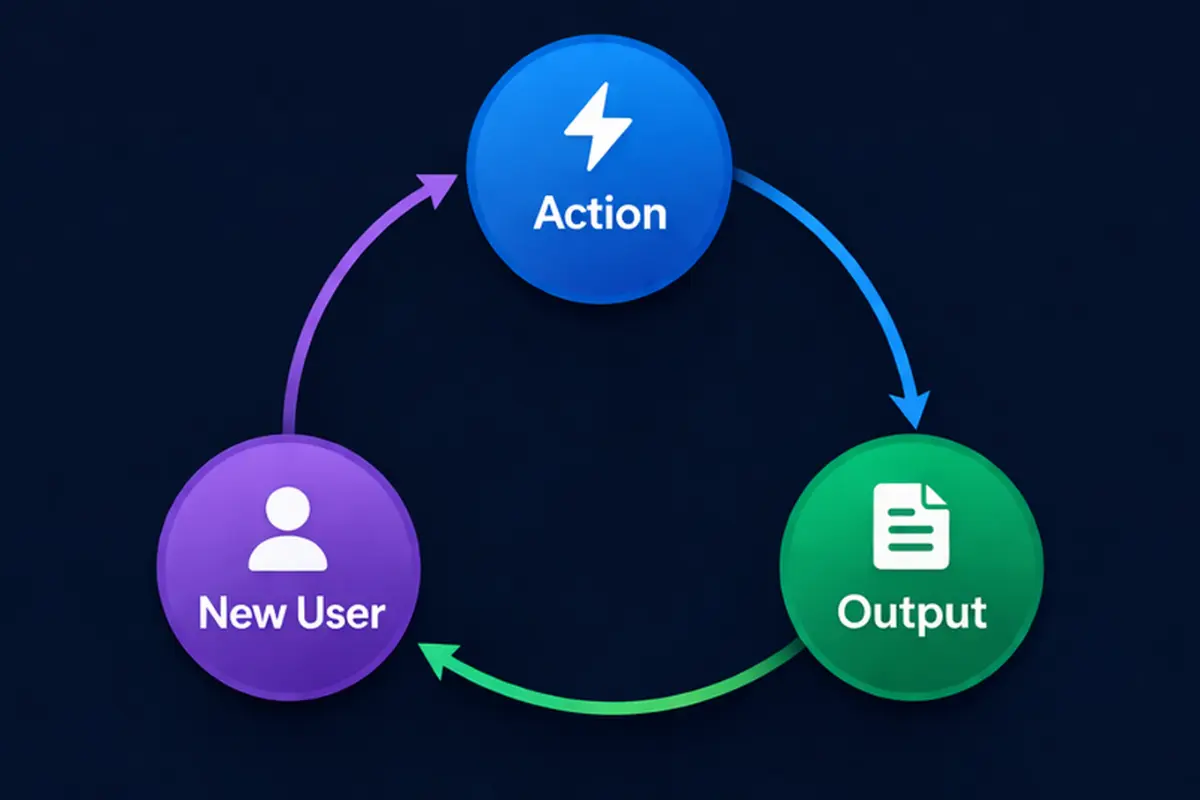
User takes a value action → that action creates an output → the output brings in a new user → repeat.
Dropbox is the textbook example. When a user shares a file, the recipient sees Dropbox. Some of those recipients sign up. Now they share files. More people see Dropbox. The loop runs itself.
The output of one user’s action is the acquisition mechanism for the next user. That’s the whole idea.
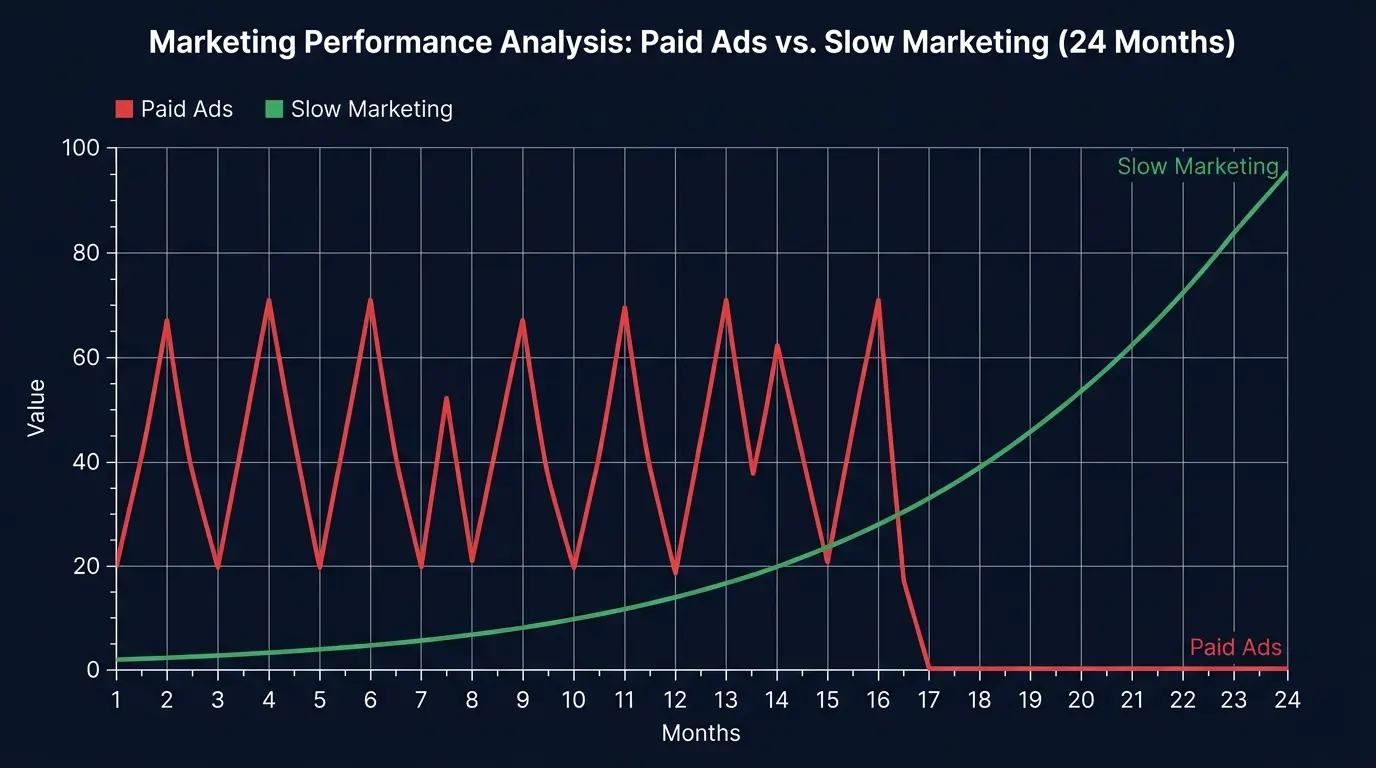
The loop doesn’t stop when a campaign ends. It doesn’t need a bigger budget to scale. It compounds.
Growth Loop vs. Marketing Funnel: What’s the Real Difference?
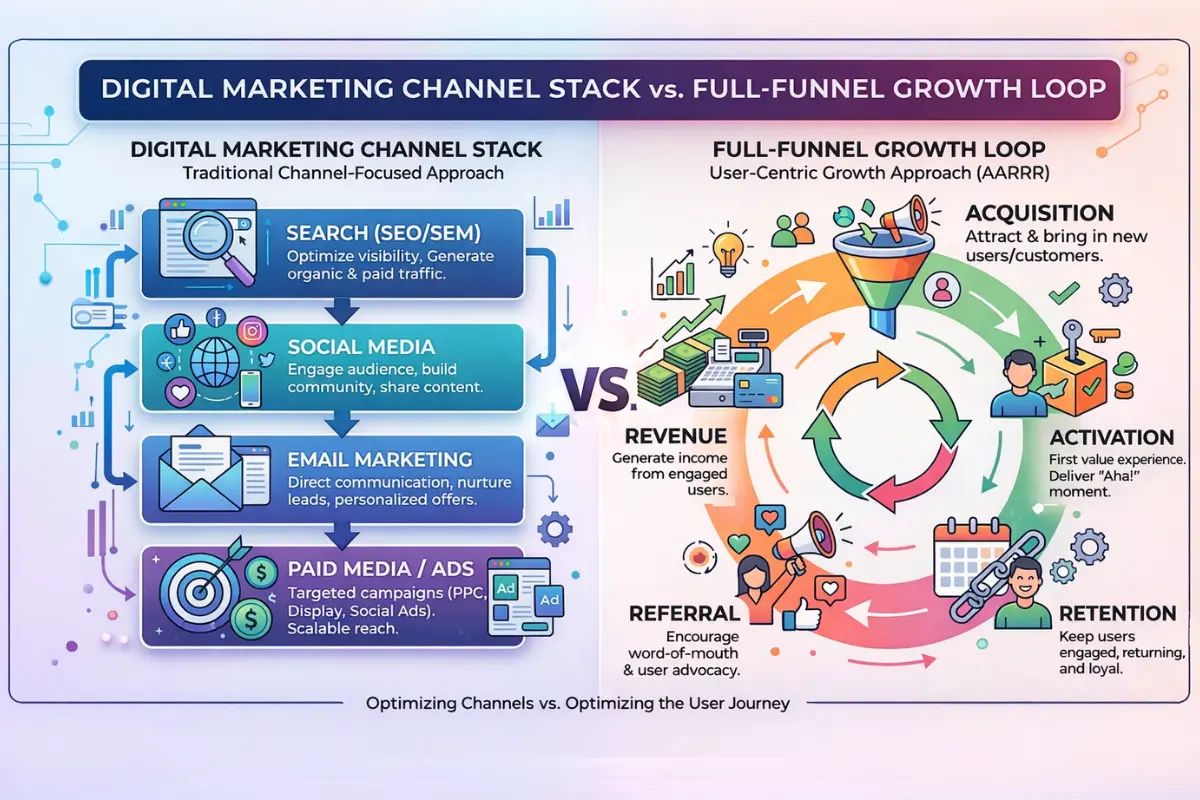
A funnel is a one-way street. You pour traffic in at the top through ads, SEO, or outreach, and hope enough converts at the bottom. When the effort stops, the traffic stops.
A growth loop is a flywheel. The energy you put in at the start compounds over time.
| Funnel | Growth Loop | |
|---|---|---|
| Direction | Linear | Circular |
| Powered by | Budget or effort | Previous users and outputs |
| Scales with | Spend | Compounding cycle volume |
| Stops when | Budget runs out | You break the loop |
Most small businesses are stuck in funnel thinking. That’s why growth feels like a treadmill. The moment you stop running, it stops too.
A growth loop breaks that pattern. It’s not about spending more. It’s about building a system that earns its own momentum.
Why Should Small Business Owners Care About Growth Loops?
Because you can’t outspend bigger competitors. A growth loop changes the game by making your existing users do part of the acquisition work for you.
This matters especially if:
- You’re running a lean team with a limited budget
- You’re building a content or community play
- You want sustainable traffic that survives when ad spend dries up
How Do You Build a Growth Loop? (Step-by-Step)
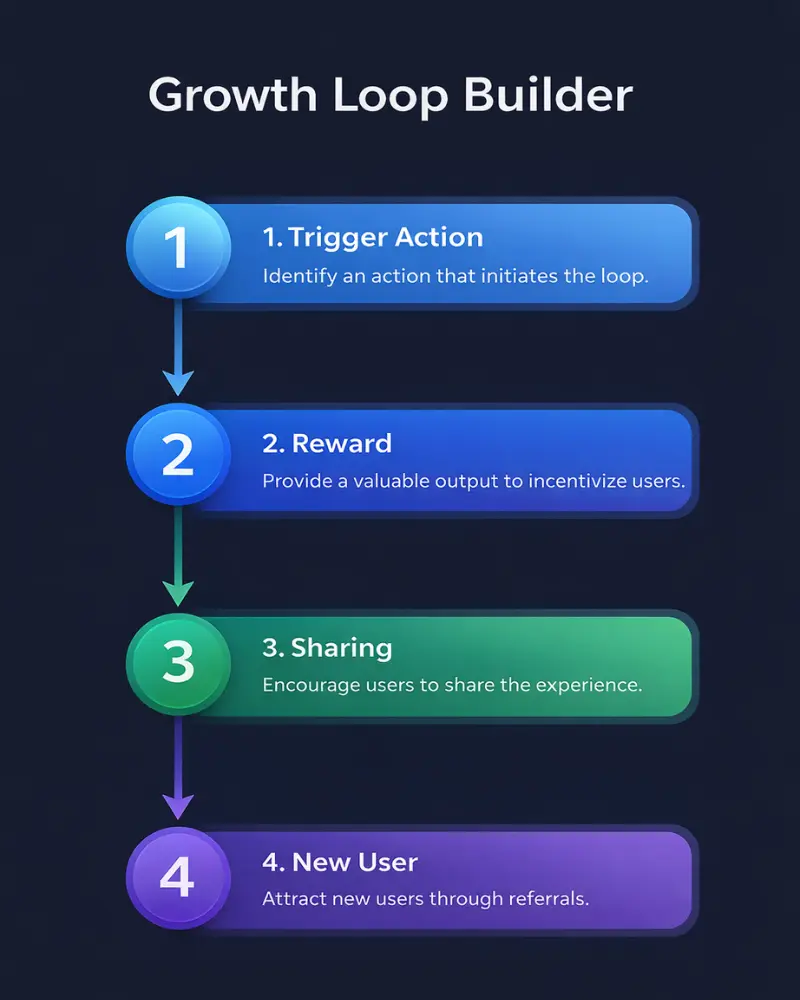
You don’t need a SaaS product or a massive audience. You need a repeatable value action, an output, and an acquisition mechanism. Here’s how to map your first loop.
Step 1: Identify Your Core Value Action
What’s the one thing a user does inside your product or content that signals they got real value? For a SaaS tool, it might be completing their first project. For a blog, it might be finishing and sharing an article.
Start there. That action is the engine of your loop.
Step 2: Find the Output That Action Creates
Every value action creates something: a shared link, a review, a notification, a piece of user-generated content. That output is your acquisition hook.
Ask yourself: When someone takes this action, what do other people see?
Step 3: Connect the Output Back to New User Acquisition
Now link that output to a new user entry point. The output has to bring someone new into the loop. If it doesn’t, it’s just activity. Not a loop.
This is where most businesses have dead ends. Outputs exist, but they go nowhere. Fix the connection and the loop starts running.
Step 4: Map It, Measure It, and Optimize
Draw the loop. Literally put it on paper or a whiteboard.
Three nodes minimum: Action → Output → New User. Then identify where friction exists at each step and remove it.
Pick one metric for each node. Track the conversion rate between them. That’s where you’ll find your biggest growth lever.
What Are Some Real-World Growth Loop Examples?
Here are three loop types worth studying:
1. Viral Loop (Referral-Driven) Used by Dropbox, Uber, and PayPal. A user invites a friend. The friend signs up. The friend invites others. The mechanism is incentive-driven sharing. Simple and powerful.
2. Content Loop (SEO-Powered) A publisher posts an article. It ranks on Google. Readers share it. More traffic arrives. Google boosts the ranking further. The loop is content quality feeding distribution, feeding more exposure.
This is the exact loop behind sites like raymellumenario.com, and it’s completely buildable for lean teams with a focused content strategy.
3. User-Generated Content Loop Used by Yelp, TripAdvisor, and Canva. Users create content (reviews, designs, templates). That content attracts new users searching for it. New users create more content. Contribution drives discovery drives more contribution.
The common thread: every loop creates something valuable for the next user before they even arrive.
FAQ: What is Growth Loop
What is the difference between a growth loop and a viral loop?
A viral loop is a specific type of growth loop powered by user-to-user sharing or referrals. All viral loops are growth loops, but not all growth loops are viral. SEO-driven content loops and user-generated content loops don’t require virality to work.
Can a small business really build a growth loop?
Yes, and growth loops are arguably more valuable for small businesses precisely because they reduce dependence on paid acquisition. A blog-driven SEO loop or a simple referral program are both accessible starting points with low overhead and strong compounding payoff.
How long does it take for a growth loop to produce results?
It depends on the type. Viral and referral loops can show momentum in weeks. Content and SEO loops typically take 3 to 6 months to compound meaningfully. The payoff: once they’re running, they’re hard to stop.
Do I need a software product to use growth loops?
No. Service businesses, consultants, content creators, and e-commerce brands can all build growth loops. The loop just needs a repeatable value action, an output others see, and a path for those others to enter the loop.
What tools should I use to track growth loop performance?
Google Analytics 4 for content and traffic loops, referral tracking tools (ReferralHero, Viral Loops) for referral loops, and Ahrefs or Google Search Console for SEO loops. Keep the dashboard simple: one conversion metric per loop node.
Start Building the Machine
If you’re a founder or small business owner who’s tired of the paid-traffic treadmill, a growth loop is the system worth building next. It takes more upfront thinking than running an ad. The payoff is compounding growth that doesn’t evaporate when the budget does.
Want help mapping a growth loop for your specific business? Work with me for hands-on growth consulting built for lean teams.